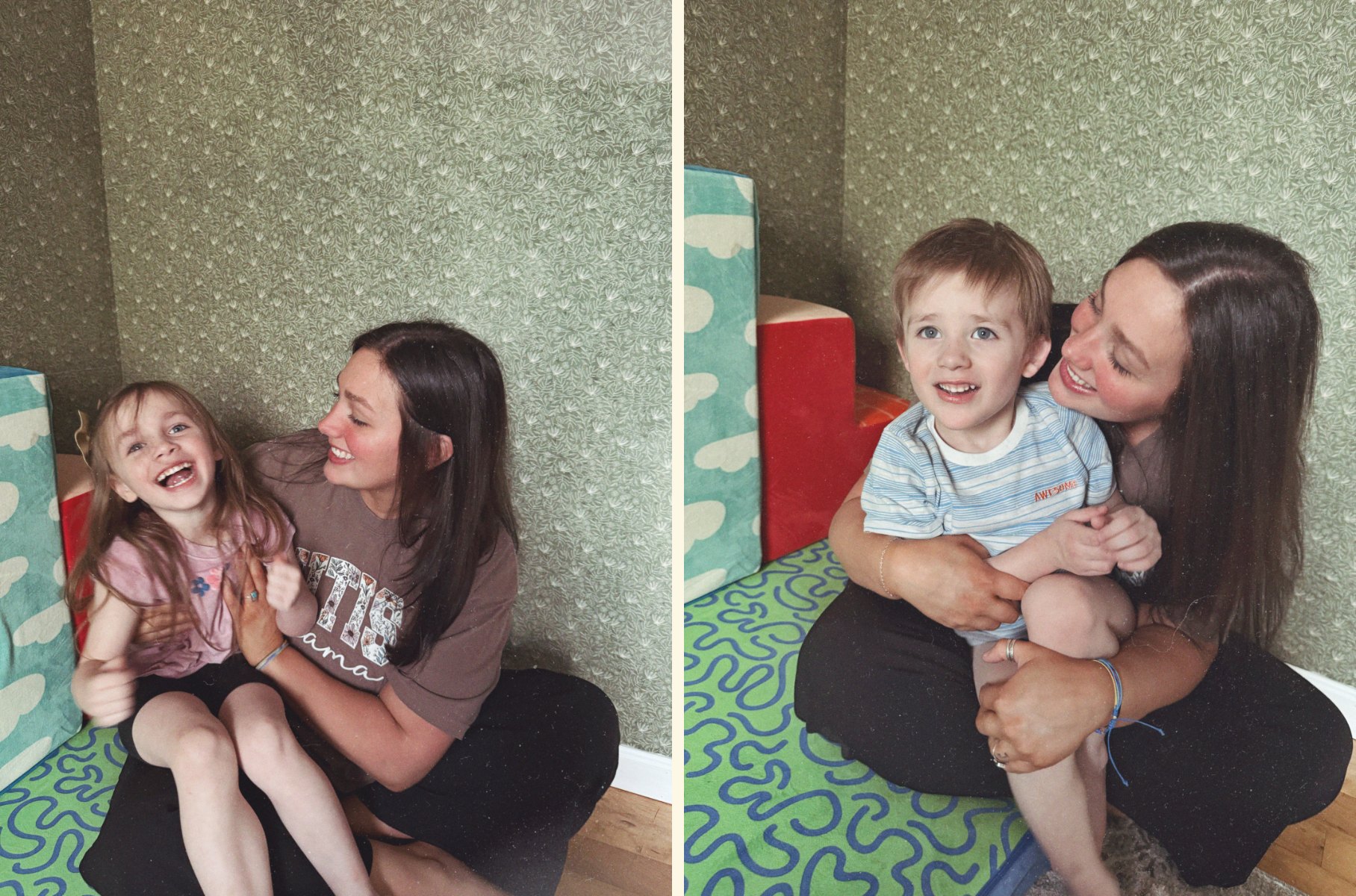


Parent involvement in ABA therapy means learning a few individualized strategies, using them during familiar routines, and sharing observations with the care team. Parents do not need to become therapists. Their role is to help communication, self-care, and independence skills carry from ABA sessions into family, school, and community life.
Applied behavior analysis, or ABA, uses observation and structured teaching to support meaningful skill development. For children and young adults with autism spectrum disorder, goals may involve communication, daily living skills, play, safety, emotional coping, or independence.
ABA parent training connects the care plan with everyday life. It should respect the care recipient’s dignity, comfort, communication, autonomy, and specific needs.
How Can Parents Support ABA at Home?
Parents can support ABA goals by choosing one useful routine, focusing on one clear skill, and following one shared caregiver response. This response may include an agreed instruction, waiting time, prompt, and form of positive reinforcement. Families can then tell the BCBA what worked, what caused stress, and what needs to change.
A shared response does not mean continuing a strategy when the child withdraws assent, communicates discomfort, or shows signs that the task or environment needs to change. Consistency can help, but it does not require perfection. Parent participation should fit family life rather than turn the home into a full-time therapy setting.
Why Does Parent Involvement in ABA Therapy Matter?
Parent involvement in ABA therapy helps children and young adults use skills beyond structured sessions. Caregivers can support selected goals during meals, play, dressing, school preparation, and community activities. They also give the BCBA useful information about communication, stress, preferences, and behavior across different environments.
A child may use a skill with an ABA therapist but not yet use it with parents, siblings, teachers, or other caregivers. A change in the person, setting, materials, or instructions may make the skill harder to use.
Caregivers also see parts of daily life that the clinical team may not observe. A child may communicate well during play but face more challenges during morning routines. That information can help the BCBA select a practical skill and adjust behavior strategies.
What Does Research Say About ABA Parent Training?
Research supports structured caregiver education and training, although results differ across families and programs.
A 2024 systematic review and meta-analysis titled Caregiver Skills Training for Caregivers of Individuals With Neurodevelopmental Disorders found improvements in caregiver skills, psychological well-being, and interpersonal relationships within families. It also reported some developmental and behavioral benefits for care recipients. Results varied across studies and do not guarantee a specific outcome for every family.
A separate 2021 meta-analysis of parent-mediated interventions for autistic children and adolescents found some potentially beneficial effects, but the authors noted that more high-quality randomized trials were needed.
ABA parent training may strengthen caregiver skills, understanding, and confidence, but it cannot promise the same rate of progress for every child.
Mental health, work schedules, socioeconomic status, cultural values, family dynamics, and caregiver stress also affect what is realistic. A useful program should account for these factors.
Families in Charlotte, North Carolina, seeking practical guidance can explore iCare Therapy’s ABA parent training and caregiver coaching. The purpose of parent education is to make strategies easier to understand and use, not to place the full responsibility for the child’s progress on caregivers.
What Is the Parent’s Role Compared With the BCBA and RBT?
The BCBA assesses needs, develops the care plan, trains caregivers and staff, and reviews progress. The RBT provides direct ABA services under supervision. Families who want more detail can learn how BCBAs and RBTs work together as part of the child’s ABA team.
Parents share priorities, practice selected ABA strategies, and report what happens at home. Qualified professionals remain responsible for clinical decisions and changes to the program.
| Care Team Member | Main Responsibilities | Role Boundary |
| BCBA | Completes assessments, develops goals, trains the team, reviews data, and adjusts strategies | Does not apply one standard plan to every care recipient |
| RBT | Provides direct support, follows the BCBA’s plan, collects data, and reports observations | Does not design or change the care plan independently |
| Parent or caregiver | Shares concerns, joins training, practices agreed strategies, and gives feedback | Does not replace the BCBA or provide therapy throughout the day |
The BACB describes a BCBA as a graduate-level professional who may independently provide behavior-analytic services within applicable licensing laws, professional competence, organizational policies, and funding requirements. An RBT is a paraprofessional who works under close supervision.
Parents bring knowledge that professional training cannot replace. They understand the child’s history, routines, communication, interests, and signs of stress.
Parent participation may involve:
- Helping select goals that matter in daily life
- Watching a strategy demonstration
- Practicing with feedback
- Asking for clear instructions
- Sharing what worked at home
- Raising concerns about comfort, assent, safety, or stress
ABA therapy may also work alongside occupational therapy, speech-language therapy, mental health services, and special education. These services address different needs.
ABA should not replace care needed for speech, movement, sensory needs, education, mental health, or other developmental disabilities and developmental disorders.
Through family-centered in-home ABA therapy in North Carolina, caregivers can observe and practice selected strategies where daily routines occur.
How Does the One Routine, One Skill, One Shared Response Framework Work?
The One Routine, One Skill, One Shared Response Framework is an article-specific model for organizing caregiver practice. It reflects iCare Therapy’s family-centered approach but is not a formally validated clinical protocol. The family selects one familiar routine, one useful skill, and one general response that caregivers can use consistently.
This approach gives parent involvement a clear starting point without making every family interaction part of therapy.
Step 1: Choose One Familiar Routine
Begin with an activity that already happens most days.
Possible routines include:
- Breakfast
- Dressing
- Cleanup
- Homework
- Snack preparation
- Bedtime
Choose a routine that matters to the family but does not already create severe stress.
For example, a family may choose to get ready for school because the child needs support following a short visual schedule.
Step 2: Define One Observable Skill
A broad goal such as “improve behavior” does not tell parents what to practice.
Ask the BCBA to define one clear response, such as:
- Requesting help
- Choosing between two activities
- Asking for a break
- Putting one item away
- Completing one step from a visual schedule
- Using a communication device during a meal
Avoid addressing communication, waiting, cleanup, and emotional coping during the same brief practice period.
Step 3: Agree on One Shared Response
A shared response means caregivers use the same basic instructions, waiting time, prompt, and reinforcement when reasonably possible.
A simple response may look like this:
- Give one clear instruction.
- Wait for the agreed amount of time.
- Use the planned prompt if needed.
- Reinforce the completed skill.
The actual steps must come from the individualized care plan.
Step 4: Notice What Happened
Caregivers do not need to collect complex clinical data. A short note may include:
- What happened before the skill or challenge
- What the care recipient communicated or did
- Which prompt was used
- What appeared helpful
- What increased stress
This information helps the BCBA understand how the strategy works in daily life.
Step 5: Review and Adjust
Share the observation with the BCBA. The plan may need a different routine, clearer instructions, a longer response time, another prompt, or a more suitable reinforcer.
Practice should pause when the care recipient shows pain, fear, strong distress, or sensory overload.
An Example of How a Caregiver Plan May Be Simplified
A family may initially try to address several goals within one routine. One caregiver may repeat verbal instructions, while another may complete the task for the child or offer a preferred item. These different responses can make the routine unclear or difficult to evaluate.
A BCBA may recommend focusing on one instruction, one waiting period, and one planned prompt. The team can then review whether the routine is appropriate, whether the child has enough time to respond, and whether caregivers are following the same general plan.
How Can Parents Use Positive Reinforcement at Home?
Positive reinforcement occurs when a consequence follows a response and increases the future chance of that response under similar conditions. At home, reinforcement should be timely, individualized, and connected to a clearly defined skill. It does not always involve food, toys, or prizes.
The consequence may include:
- Attention or praise
- A preferred activity
- A short break
- A choice
- Access to a favorite item
- A natural result connected to the skill
First, ask the care team to define the exact response being supported. Terms such as “appropriate behavior” or “positive behavior” may be too broad on their own.
The actual goal may be requesting a break, using a communication tool, joining a daily routine, or moving to a safer area.
For example, a child asks for a break during homework. When the care plan allows the break, receiving it may reinforce better communication.
A child may prefer an item without that item reliably strengthening the target skill. Preferences can also change during the day.
Parents can ask:
- Which exact response are we reinforcing?
- What does the child value right now?
- How quickly should reinforcement follow?
- How will the strategy change as independence grows?
One common mistake is offering a preferred item without knowing which response it follows. Unclear timing can make skill development harder.
Reinforcement should support communication, choice, and meaningful participation. It should not pressure autistic children to hide pain, fear, sensory overload, or harmless autistic traits.
What Is a Prompting Hierarchy?
A prompting hierarchy organizes different forms of help, including natural cues, gestures, visuals, spoken reminders, models, and physical support. The BCBA selects the prompt order based on the care recipient, the skill, and the individualized plan. Parents use the prompting and fading process taught during training.
| Prompt Type | Home Example |
| Natural cue | An empty cup signals that more water may be needed |
| Gesture | Pointing toward a visual schedule |
| Visual prompt | Showing a picture or checklist |
| Verbal prompt | Giving a short spoken reminder |
| Model prompt | Demonstrating the action |
| Physical support | Providing the approved level of hands-on help |
Prompt fading means reducing help as the person develops confidence and skill. The purpose is greater independence, not removing support before the person is ready.
For example, a young adult may first use a visual checklist while preparing a snack. Later, the caregiver may only point toward the list. The setup of the activity may eventually provide enough guidance.
This is an illustrative example, not a fixed sequence for every person.
Giving several verbal prompts without enough response time is a common mistake. Completing the task too quickly may also remove the person’s chance to respond.
Caregivers should not improvise hands-on prompting. Any physical assistance should be specifically taught and approved within the care plan, use the least intrusive effective level of help, and account for assent, dignity, safety, sensory needs, and motor ability. Concerns involving pain, movement, swallowing, or physical function may require assessment from an appropriate healthcare professional.
How Can Families Support Generalization and Consistency?
Generalization means using a skill with different people, materials, routines, or settings. Consistency means caregivers follow the same general response often enough to reduce mixed messages. Families can support both by making small changes, keeping instructions clear, and reporting where the skill is or is not working.
A child may first learn to request help from an RBT during therapy. The next opportunity may involve asking a parent for help while dressing. Later, the same skill may appear with another caregiver during a meal or community activity.
Skills can generalize across:
- People: RBT, parent, sibling, teacher, or grandparent
- Places: Living room, kitchen, school, store, or playground
- Materials: Different cups, clothes, toys, or communication tools
- Routines: Therapy, meals, play, school preparation, or shopping
Change one part of the situation at a time when possible. Generalization should not become a test where adults remove support and wait for the child to struggle.
A short written plan can help several caregivers follow the same response:
- State the goal.
- Give the agreed cue.
- Wait for the planned time.
- Use the recommended prompt.
- Provide the planned reinforcement.
- Record concerns for the BCBA.
Real family life will still affect practice. Illness, work, school, siblings, stress, and changing schedules can interrupt routines.
When the plan does not fit, that feedback helps the BCBA adjust strategies to the family’s and the care recipient’s specific needs.
When Should Parents Pause and Contact the iCare Team?
Parents should pause the strategy and contact the iCare BCBA when it causes distress, stops working, requires physical support, or raises concerns about the child’s care plan. Contact an appropriate healthcare professional when pain, illness, medication effects, or another health concern may be involved.
Contact the BCBA when:
- The child shows pain, fear, or sensory overload.
- The strategy regularly increases stress.
- Caregivers do not know which response to use.
- Physical support seems necessary.
- Family members received conflicting instructions.
- The skill appears only during therapy.
- The prompt or reinforcer no longer works.
- The routine has become too long or difficult.
- The child’s behavior changes suddenly.
A sudden change in behavior, communication, sleep, eating, movement, or daily functioning may be associated with pain, illness, medication effects, sensory distress, sleep disruption, or mental health concerns. Families should contact an appropriate medical or mental health professional when a health-related cause is possible rather than assuming the change is solely behavioral.
Parent training may help caregivers understand challenging behavior and teach a safer or clearer communication response. However, no single ABA technique can be expected to resolve every episode of distress, behavioral concern, or unmet need.
How Does iCare Therapy Work With Families During In-Home ABA?
iCare Therapy involves caregivers through in-home sessions, caregiver collaboration, coaching, and BCBA-led progress reviews. Families can also learn what a day of in-home ABA therapy may look like, including how familiar routines, structured activities, communication practice, and caregiver involvement may fit within a session.
The exact level and format of caregiver participation depend on the care plan, clinical recommendations, service authorization, and family needs. These steps give families clear opportunities to share concerns, observe selected strategies, and understand what they can practice before the next session.
At the start of an in-home visit, a caregiver may share a difficult routine, recent change, or new success. The RBT can then address approved goals within familiar activities and spaces.
At or after a session, the RBT may share observations about the approved goals that were practiced, following the BCBA’s plan and the provider’s communication procedures. The BCBA remains responsible for clinical recommendations and changes to the program. This communication can connect the child’s therapy with daily life without asking parents to manage a complete ABA program.
The BCBA reviews progress, caregiver observations, and barriers. When a strategy does not fit the routine, the team may simplify the steps, choose another time of day, or focus on a smaller skill.
iCare Therapy serves children, adolescents, and young adults with autism. Caregiver coaching may therefore address early communication and play, school routines, self-care, household skills, or greater independence.
Conclusion
Parent involvement in ABA therapy works best when it is clear, practical, and connected to daily life. The One Routine, One Skill, One Shared Response Framework gives families a manageable starting point. Reinforcement, prompts, and practice should support meaningful skills while respecting the care recipient’s communication, comfort, and autonomy.
iCare Therapy helps Charlotte, North Carolina families connect ABA goals with real routines through in-home services, caregiver coaching, BCBA oversight, and progress reviews. Contact iCare Therapy to get started with family-centered ABA support.