

Shared by Kristel in Autism Stories
“A difficult beginning can still lead to a bright future.”Kristel
If you have questions about care for yourself or a family member, we’re available for a consultation.
Call (800) 264-1985, or add your question in the last step of the form and we will answer by email.
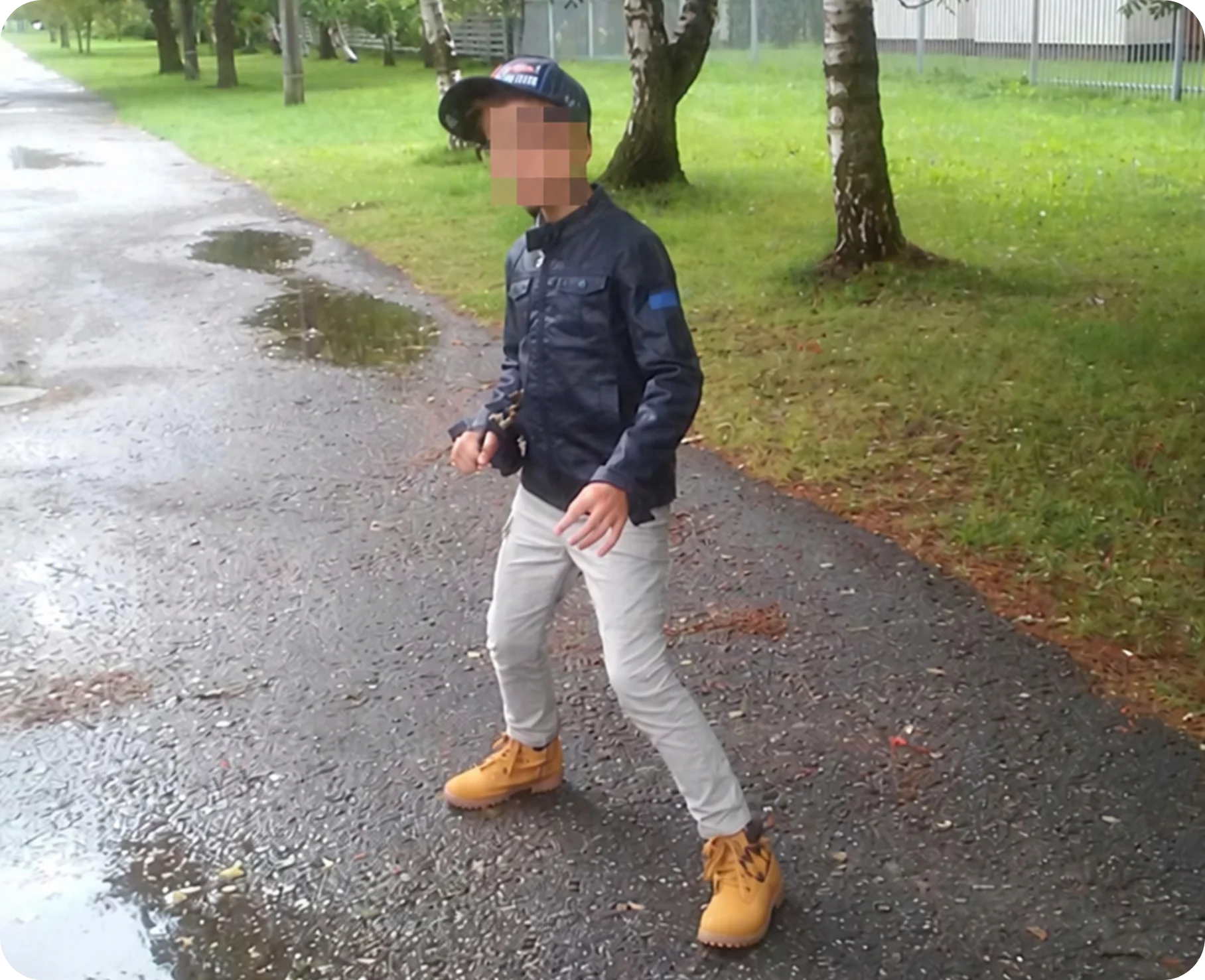
This story, including all photos, was submitted by its author through Share Your Autism Story with full permission to share it.
Kristel’s son Oskar did not say his first words until he was four. Today he is twenty. He is finishing twelfth grade, works in the summer, and keeps in touch with his friends. Kristel shared their story on our Share Your Autism Story page because she wants other parents to know that progress can take time, and that every child’s path is different.
Every story in Autism Stories is published in the author’s own words. We correct spelling and grammar only, and we never rewrite, shorten, or rearrange a story. Kristel asked to be named by her first name only, so we left out her last name. Around her story, the iCare Therapy team has added some context on the three things she talks about most: getting help when a child is slow to talk, finding the right fit, and the support that carries a family through.
We are the parents of a kind, polite, handsome, tall young man. Oskar is twenty years old. Over the years, we have had to work very hard to get to where we are today.
My labor was induced, and after Oskar was born, our midwife said he could easily have been born on his own a couple of weeks later. She explained that he was still covered in a thick layer of vernix, the protective coating on a baby’s skin, which she felt indicated that he had been born a little too early. Unfortunately, she believed our doctor had miscalculated his due date.
Oskar did not speak until he was four. From the age of two, we took him to a neurologist for a checkup once a year. The neurologist told us that Oskar simply did not have anything to say yet and that everything was within the normal range. Unfortunately, no one advised us to find a speech therapist. Since we had never faced anything like this before, it did not occur to us either.
Thankfully, Oskar’s pediatrician eventually suggested that he might need help from a speech therapist. Finding one was far from easy. At the time, few speech therapists were willing to work with such a young child. By the time we finally found the best speech therapist in the world, Oskar was about five and a half.
We were very fortunate that Oskar formed such a strong bond with her. That connection between a child and their speech therapist is so important for their work together to go well.
Of course, those sessions cost a lot. We were also offered rehabilitation services, and a support plan was put in place. Through that plan, Oskar received publicly funded occupational therapy and speech therapy. Unfortunately, he did not connect with the speech therapist provided through those services, so we continued paying for private sessions with his first therapist.
We are very glad we did, because before long, Oskar began using words. Along the way, we also had to learn some sign language so he could communicate certain things to his teachers at preschool. We were told that the area of his brain responsible for speech was not developed enough, which was why he struggled to speak.
We were very fortunate. A lovely little girl was seeing the same speech therapist at the time, and her difficulties with speech were so severe that she never began speaking. That was very sad.
Because Oskar started speaking so late, he fell a couple of years behind his peers in his development. We changed preschools several times to find smaller groups for him. Eventually, we secured a place at a preschool for children who needed more support.
None of this was easy. Oskar would make friends, and then we would have to move him to another preschool because we wanted the best for him. Thankfully, he adapted quickly, but losing those friendships can leave a lasting mark.
Oskar started school a year later than usual after we applied to postpone his school entry. By the time he started, he could read, which was a lovely surprise given how late he had begun speaking. But understanding things was difficult for him. Reading comprehension was especially hard, and math was a challenge too.
Halfway through first grade, we changed schools as well because a large school was not the right fit for him. We found a lovely house just outside the city, with a school very close by. He stayed there through ninth grade.
It was not an easy road. We requested that Oskar be allowed to attend smaller classes for certain subjects. The school accommodated his needs, which made learning easier. We also had a private tutor come to our home, and that helped a great deal, especially around exam time.
The truth is that this whole journey has been very hard. We have had to move several times. But Oskar has also taught us so much: to change our perspective, listen more, and be more patient.
This year, Oskar agreed to be assessed for autism and ADHD because he shows certain signs of both. However, his results were borderline, and he did not receive a diagnosis of either condition.
After sharing this long story, what I want to say is this: when facing the challenges life brings, try to stay positive and accept the help that is offered. You are not alone in your struggles. Sometimes, you have to explore the different ways you can support yourself and your children so that life can be easier, both now and in the future.
Support from the whole family also makes an enormous difference. We have been fortunate in that respect. Our family is very close.
Our future is bright. Oskar is finishing twelfth grade at an online upper secondary school for adults. He works during the summer, communicates well, and has friends he keeps in touch with. All that hard work and effort has been worth it.
I want people to know that progress can take time, and every child’s path is different. Ask questions, seek support, and keep looking for help that works for your child. You do not have to face everything alone.
Oskar has taught us to listen, be patient, and see things from a different perspective. There have been many hard moments, but seeing the young man he is today fills us with pride and hope. A difficult beginning can still lead to a bright future.
Kristel
Kristel writes that no one told her family to look for a speech therapist when Oskar was two or three. A doctor said he just had nothing to say yet. Later, a pediatrician suggested speech help, and by the time the family found the right therapist, Oskar was about five and a half.
Parents today can get clearer advice. The CDC tells parents who are worried about how their child talks, plays, or moves not to wait. You can ask your child’s doctor for a developmental screening. If your child is under 3, you can call your local early intervention program. If your child is 3 or older, you can ask your local public school for an evaluation. You do not need a referral or a diagnosis to make that call. A National Institutes of Health guide notes that the first three years are the busiest time for learning to talk, and that a doctor may send a child to a speech therapist and for a hearing test.
The American Speech-Language-Hearing Association (ASHA) reports that about 50% to 70% of children who start talking late catch up with their peers by late preschool or school age. Others keep having trouble, and some who catch up still find reading, spelling, or complex language harder later on. That fits what Kristel describes. Oskar could read when he started school, but reading comprehension and math were still hard for him. ASHA advises checking a child’s progress at set times, such as every six months.
“Oskar has also taught us so much: to change our perspective, listen more, and be more patient.”Kristel
One part of Kristel’s story stands out. Oskar formed a strong bond with his first speech therapist, and the family kept paying for private sessions because that bond mattered. Research points the same way. A 2026 study in the Journal of Communication Disorders found that when speech therapists and parents had a strong working bond, children tended to do better in therapy.
Fit mattered at school too. The family moved Oskar to preschools with smaller groups, asked for smaller classes in some subjects, and had a tutor come to their home before exams. Each change took work, and Kristel is honest that moving Oskar meant losing friends along the way. If you are weighing choices like these, our guide to preparing for an IEP meeting in North Carolina can help you plan what to ask for.
This year, Oskar agreed to be assessed for autism and ADHD because he shows some signs of both. His results were borderline, and he did not receive either diagnosis. Many families live in this space, where a child has real needs but no clear label. Kristel’s story is a reminder that help does not have to wait for a diagnosis. The CDC says parents can ask for an evaluation without one, and support can start while questions are still open.
Kristel writes that support from the whole family makes an enormous difference, and that her family is very close. Her advice to other parents is simple. Stay positive, accept the help that is offered, ask questions, and keep looking for help that works for your child. If you are looking for that kind of support, our guide on autism parent support in North Carolina can help you find people and groups near you.
Kristel shared her story so that parents of a child who is slow to talk, or slow to find their way, know they are not alone. We can listen to families like hers, ask fewer questions about labels, and ask more about what would help.
This story was shared with permission through Share Your Autism Story and is published in the author’s own words, with spelling and grammar corrections only. It reflects one family’s experience and is not medical advice.
Share your experience in your own words, and choose the name we use.
Read stories from people with autism and the families who love them. See all stories
Autism Stories is a place where people with autism, and the people who love and support them, tell their own stories in their own words. You do not need to be a writer, and your story does not have to be polished or grand. It just has to be yours. You can write it, record it, or film it, and you choose the name we use.
If her words sounded familiar, think about who might feel that way when they read yours. Share your autism story, or read more Autism Stories from parents and families like hers.