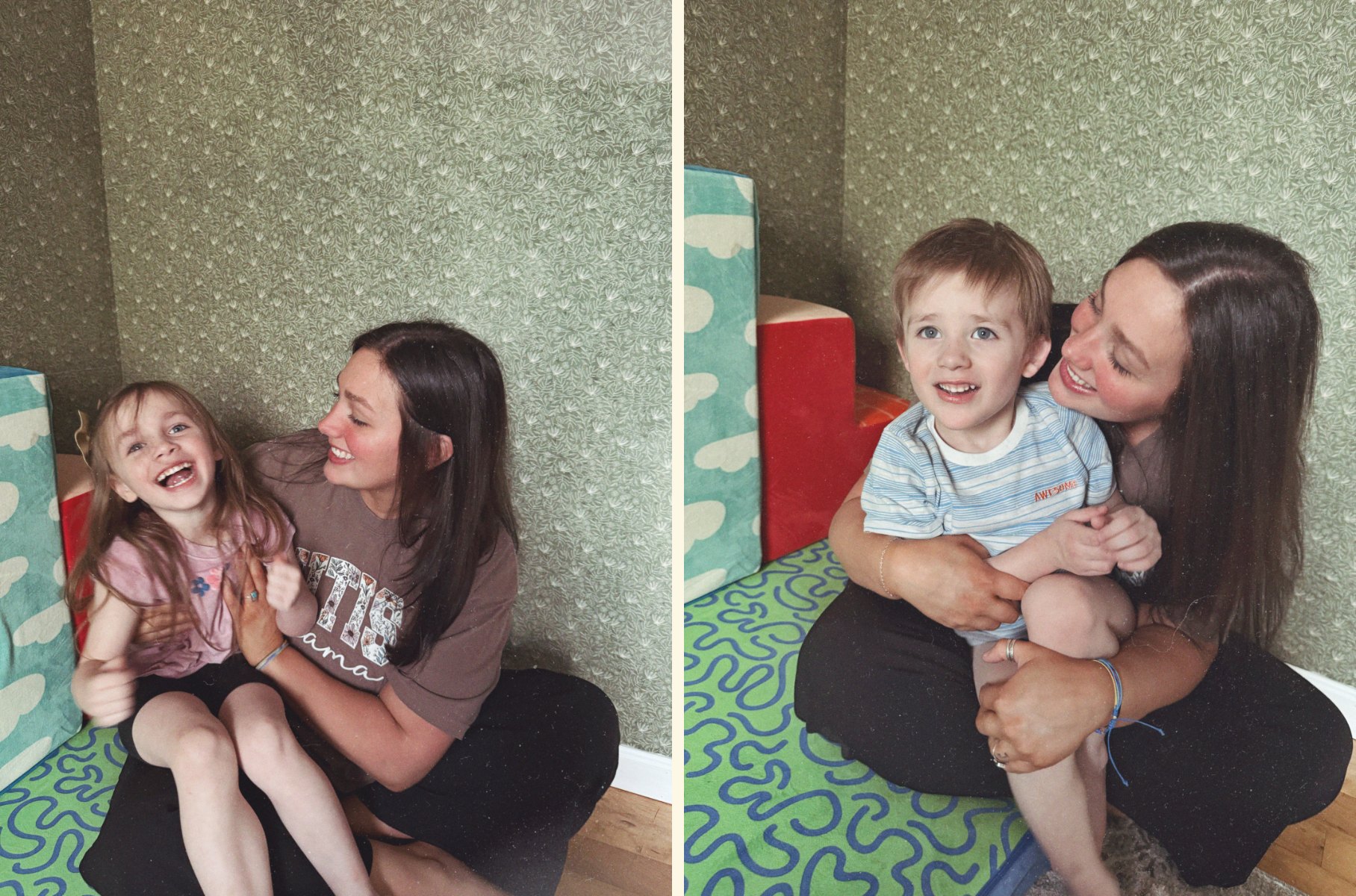

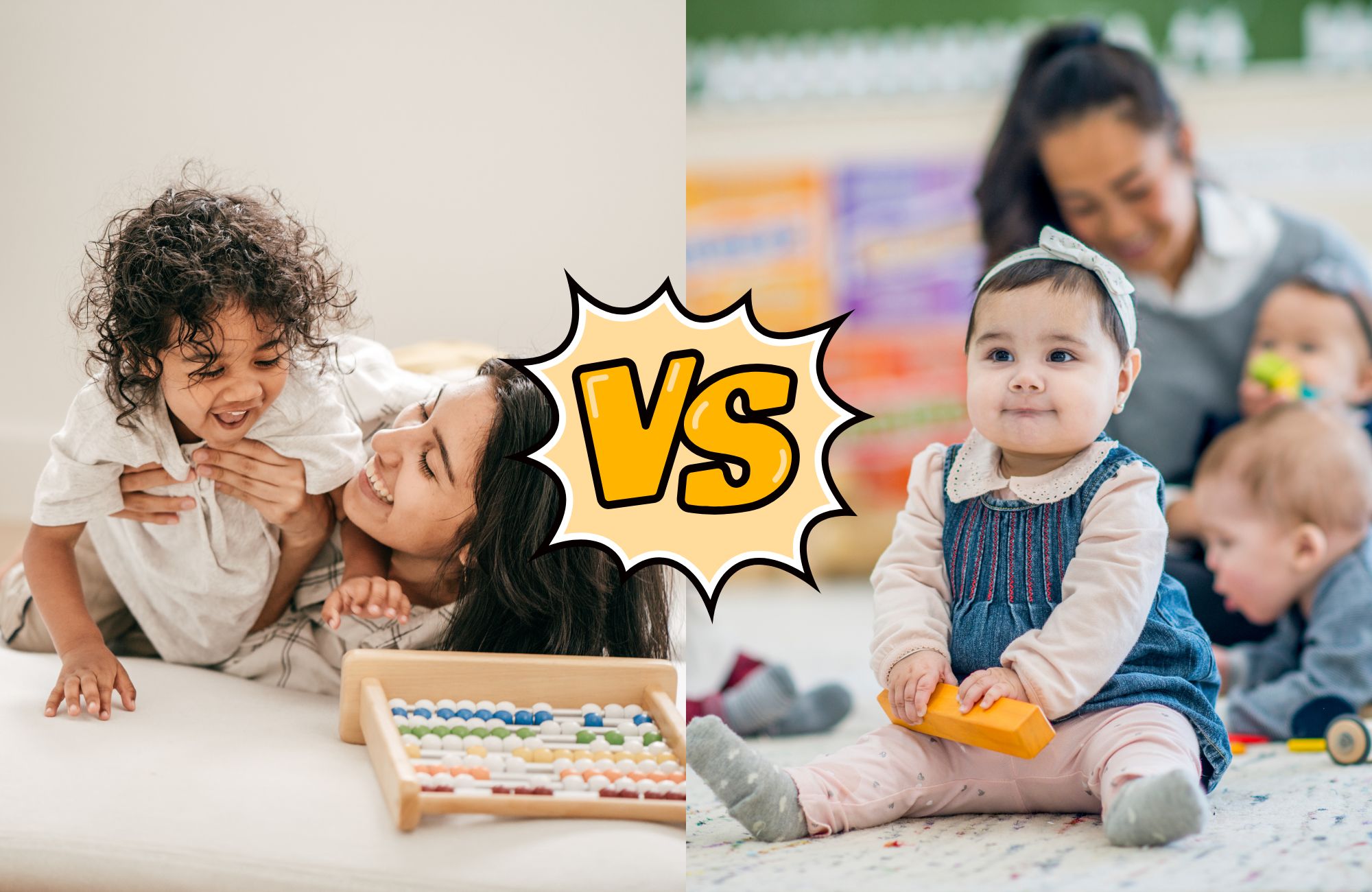
Both in-home and clinic-based ABA therapy are effective, evidence-based options for children with autism spectrum disorder. For many families, in-home ABA therapy is the stronger starting point, especially for younger children, children with sensory sensitivities, and children working on daily living skills. The right setting depends on your child’s goals, not a general preference.
If you are already exploring in-home ABA therapy in North Carolina, this guide will help you understand what separates these two therapy settings and how to make a confident, informed decision for your child.
What Is the Difference Between In-Home and Clinic-Based ABA Therapy?
In-home vs clinic ABA therapy comes down to one core difference: where the work happens and how that location shapes what a child learns. In-home ABA therapy delivers Applied Behavior Analysis in the child’s natural environment, where a Registered Behavior Technician works directly within daily routines under BCBA supervision. Clinic-based ABA therapy takes place in a structured center built for focused skill-building. Both are evidence-based; the key difference is where and how skills are practiced.
Applied Behavior Analysis, or ABA, is a scientifically validated autism treatment approach to improving specific behaviors in children with autism spectrum disorder. It focuses on building communication skills, daily living skills, social skills, and independence through structured, individualized strategies.
In both settings, Board Certified Behavior Analysts design the individualized treatment plan. A Registered Behavior Technician delivers the direct therapy. Both credentials are governed by the Behavior Analyst Certification Board (BACB), which sets national standards for training, supervision, and ethical practice.
The setting determines how ABA therapy services are delivered, not how seriously they are taken. In-home therapy uses the child’s natural environment as the workspace. Clinic-based therapy uses a structured facility. Each has distinct advantages depending on the child’s specific goals and needs.
In-Home vs. Clinic-Based ABA Therapy: A Side-by-Side Comparison
When comparing in-home and clinic-based ABA therapy, the real differences come down to environment, family involvement, skill generalization, and scheduling flexibility. For many families, especially those with younger children or children working on daily living goals, home-based ABA therapy offers distinct clinical advantages that a clinic setting cannot easily replicate.
| Factor | In-Home ABA Therapy | Clinic-Based ABA Therapy |
| Setting | Child’s natural home environment | Structured therapy center |
| Family involvement | High, caregivers observe and learn in real time | Lower, parents typically attend separate sessions |
| Skill generalization | Strong skills practiced that will be used | May require extra steps to carry skills home |
| Peer interaction | One-on-one focus | Group activities and peer interaction available |
| Scheduling flexibility | Adapts to family routine | Fixed clinic hours |
| NC Medicaid coverage | Covered for eligible children | Covered for eligible children |
| Caregiver training | Built naturally into each session | Usually scheduled as a separate appointment |
| Best fit for | Younger children, sensory sensitivities, and daily living goals | Children are ready for peer-based social interaction and skill development |
Neither setting is automatically better. What matters is whether the setting matches the child’s specific clinical goals, comfort level, and family situation. A qualified BCBA will always assess these factors before recommending a therapy setting.
What Are the Benefits of In-Home ABA Therapy for Children With Autism?
In-home ABA therapy gives children the opportunity to learn and practice essential skills in the exact environment where those skills matter most. Research from the Journal of Autism and Developmental Disorders shows that behaviors learned in natural environments are more likely to generalize, meaning children thrive when they can use those skills independently, across people and situations, without needing extra prompting from a therapist.
Skills Transfer More Naturally When Learned at Home
Behavioral generalization is one of the core goals of ABA therapy. It means a child does not just perform a skill during a therapy session; they use it in everyday life, with different people, in different situations.
When in-home therapy happens, generalization happens more naturally. A child learning to ask for help during breakfast at their own kitchen table is already practicing that skill, where it will actually be needed. There is no gap between the clinical setting and the home setting, because they are the same place.
The Autism Speaks overview of Applied Behavior Analysis notes that one of ABA’s primary goals is helping children apply learned behaviors across everyday life settings. In-home therapy is structurally designed to support exactly that.
As an example, a child working on communication skills development might practice asking for a snack using words instead of grabbing, not at a therapy table, but standing in their own kitchen, with their own parent nearby. That is the kind of real-life skills context a clinic-based setting cannot fully replicate.
Families Become Part of the Therapy From Day One
One of the most significant benefits of in-home ABA therapy is what happens between sessions.
When an RBT works inside the home, family members can watch strategies in action. They can ask questions in real time. They begin learning the same reinforcement techniques the therapist uses, and they can apply those ABA techniques during mealtimes, transitions, play, and bedtime routines.
In clinic-based therapy, that level of family involvement usually requires a separate, scheduled parent training appointment. In-home therapy offers this naturally, built into every session from the start.
This carry-over effect means the child’s therapy does not stop when the RBT leaves. It continues through every family interaction throughout the day. If your child is working on communication, daily living, or behavior goals at home, speaking with an iCare Therapy care coordinator can help clarify whether home ABA therapy is the right starting point for your family.
Children Feel Safer and More Regulated in Familiar Spaces
For children with sensory sensitivities or anxiety around unfamiliar environments, a familiar environment can make a significant clinical difference.
New spaces, new smells, lighting, sounds, and people can raise a child’s stress level before therapy sessions even begin. When a child is dysregulated, focused learning becomes much harder.
At home, the child is already in familiar surroundings they know and trust. That lower baseline of stress means more engagement, more responsiveness, and more productive in-home sessions. This is especially true for younger children and children who are earlier in their developmental stage.
When Is Clinic-Based ABA Therapy the Better Option?
Clinic-based ABA therapy is often the stronger choice when a child needs structured peer interaction, access to specialized equipment, or a controlled environment to focus. It may also be recommended when a BCBA determines that center-based ABA therapy better matches the child’s specific clinical goals, or when a child has already built foundational skills and is ready for group-based social interaction.
In-home therapy is not the right fit for every child at every stage. A clinic setting may be the better clinical recommendation when:
- Your child is ready to practice social interaction with peers in a structured environment
- Your child’s behavior plan requires specialized tools or specialized equipment not available at home
- Your child responds better to a controlled environment with minimal household distractions
- The home environment presents consistent barriers to delivering ABA therapy services effectively
- Your child’s BCBA assessment recommends a center-based ABA approach based on clinical evaluation
As an example, a child who becomes easily overstimulated by household noise or sibling activity may engage more consistently in a clinic-based setting, at least early in their therapy journey, before those foundational skills are ready to transfer home. Clinic-based therapy offers a level of structure and concentrated learning that can genuinely support the child’s growth in those situations.
Some children also benefit from a hybrid approach, starting with in-home ABA sessions to build comfort and foundational skills, then transitioning to a clinic setting for peer-focused social skill development. Your child’s BCBA will guide any setting changes based on the child’s progress, not assumptions.
When Is In-Home ABA Therapy the Right Fit for Your Child?
In-home ABA therapy tends to be the strongest fit for younger children, children with sensory sensitivities, and children whose therapy goals center on daily living skills, communication skills, or sibling and family involvement. If your child feels overwhelmed in new environments, starting home therapy is often the most effective and clinically sound choice for the child’s development.
Signs In-Home ABA Therapy May Be the Right Starting Point
- Your child is under 6 or is early in their ABA therapy journey
- Your child experiences sensory sensitivities or anxiety in unfamiliar settings
- Therapy activities involve daily routines, mealtimes, transitions, morning schedules, or bedtime
- Sibling or family involvement is a primary goal in your child’s individualized treatment plan
- You want to be actively involved in learning and reinforcing ABA techniques between sessions
- Transportation to a clinic-based setting is a consistent barrier for your family
Children benefit most when therapy meets them where they are. As an example, a child who becomes withdrawn or dysregulated in unfamiliar spaces may respond very differently once in-home therapy begins, where the environment is predictable, other family members are nearby, and the child is already at ease.
If you are not sure which ABA therapy options fit your child’s needs, iCare Therapy’s care coordinators can review your child’s goals and help your family understand what an in-home ABA assessment in North Carolina looks like and what to expect from the first session forward.
What Does a Typical In-Home ABA Session Look Like in North Carolina?
A typical in-home ABA therapy session in North Carolina begins with the RBT arriving at the family’s home, reviewing session goals with the caregiver, and working through therapy activities embedded in the child’s natural environment. Sessions are designed by a supervising BCBA and adjusted regularly based on the child’s progress.
Here is what a session generally looks like in practice:
Arrival and caregiver check-in
The RBT arrives and takes a few minutes to connect with the caregiver. This is when recent observations, a new behavior, a challenging transition, or a small win, are shared and factored into the session. Family members present in the home are part of the child’s support network from the start.
Structured therapy activities in natural settings
The RBT works with the child in the spaces where daily life happens, the kitchen, the living room, and the backyard. Therapy activities are embedded in routines, not isolated from them. As an example, a communication skills goal might be practiced during snack time at the kitchen table, or a transition goal might be worked on between play and cleanup, embedded in the moments where those real-life skills actually need to show up.
Data collection throughout
The RBT records data on each specific behavior during the session. This is how the child’s BCBA tracks the child’s progress and knows when to adjust the child’s therapy goals.
Debrief with the caregiver
At the close of the session, the RBT shares what was worked on and what family members can reinforce before the next visit. This is the carry-over moment, where the therapeutic process extends into everyday life.
For families where in-person sessions are not always possible, telehealth ABA support is also available through iCare Therapy when clinically appropriate.
For families navigating insurance coverage, iCare Therapy’s care coordinators manage NC Medicaid eligibility checks, authorizations, and ongoing approvals so families can focus on their child rather than paperwork. The CDC’s autism resources also offer useful background on autism diagnosis and early intervention for families who are earlier in this process.
How iCare Therapy Helps North Carolina Families Choose the Right ABA Setting
Choosing ABA therapy is not a decision families should have to make alone or in a hurry. The right setting depends on the child’s individual assessment, their daily living goals, their sensory profile, and the family’s capacity to be involved in the therapeutic process. For most younger children, and for children working on skills that need to transfer directly into home life, in-home ABA therapy is the stronger starting point. Family involvement, skill generalization, and the comfort of a familiar environment are not small factors. They are often what determines the child’s success.
At iCare Therapy, every family in North Carolina starts with a thorough BCBA-led assessment that informs the setting recommendation from the beginning. If in-home ABA therapy is the right fit, iCare’s team of Board Certified Behavior Analysts and RBTs will build a plan around your child’s real routines, real natural environment, and real goals. Contact iCare Therapy to speak with a care coordinator about your child’s needs, insurance coverage, and what the next steps look like for your family.
FAQs
Is in-home ABA therapy as effective as clinic-based ABA therapy?
Yes. Both in-home and clinic-based ABA therapy are evidence-based and effective when delivered by qualified professionals following an individualized treatment plan. In-home therapy has a specific clinical advantage for skill generalization; children practice behaviors in the same environment where they need to use them, which supports faster real-world carry-over. The most important factor is not the setting but how well the therapy is matched to the child’s specific goals.
Does NC Medicaid cover in-home ABA therapy in North Carolina?
Yes. North Carolina Medicaid covers ABA therapy services for children with an autism spectrum disorder diagnosis, including in-home services, when the treatment is deemed medically necessary and prior authorization is obtained. Families should confirm their child’s specific eligibility and coverage details with a care coordinator.
What is the most successful treatment for autism?
Applied Behavior Analysis is one of the most extensively researched and widely recommended treatments for autism spectrum disorder. Decades of peer-reviewed research support its effectiveness, and organizations such as the American Academy of Pediatrics recommend it. Children often achieve the best outcomes when they begin therapy early, participate consistently, and follow an individualized treatment plan that targets their specific communication, social, and daily living goals.
Is in-home ABA better than center-based ABA for younger children?
For many younger children, in-home ABA therapy is the stronger clinical starting point. Young children are often still building tolerance for new environments, and beginning therapy in a familiar environment reduces stress and increases engagement. Children at this developmental stage are also working on goals, mealtimes, routines, and communication with family members, which occur primarily at home. A BCBA assessment will always guide the recommendation based on the child’s individual needs.
What role does the BCBA play in in-home ABA therapy?
In in-home ABA therapy, the Board Certified Behavior Analyst designs the individualized treatment plan, sets measurable goals, supervises the RBT, and reviews session data regularly to adjust the program as the child progresses. The BCBA does not typically deliver direct therapy in every session but is responsible for the clinical direction of the entire plan. This supervisory structure is a standard requirement governed by the BACB and applies in both home-based and clinic-based settings.
Does in-home ABA therapy include caregiver training?
Yes. When therapy takes place inside the home, caregivers can observe strategies in real time, ask questions during or after sessions, and begin applying the same techniques throughout daily routines. At iCare Therapy, caregiver training is built into the home-based model from the first session, not offered as a separate add-on. This carry-over effect is one reason in-home ABA can produce strong results in children’s everyday behavior and skill development.